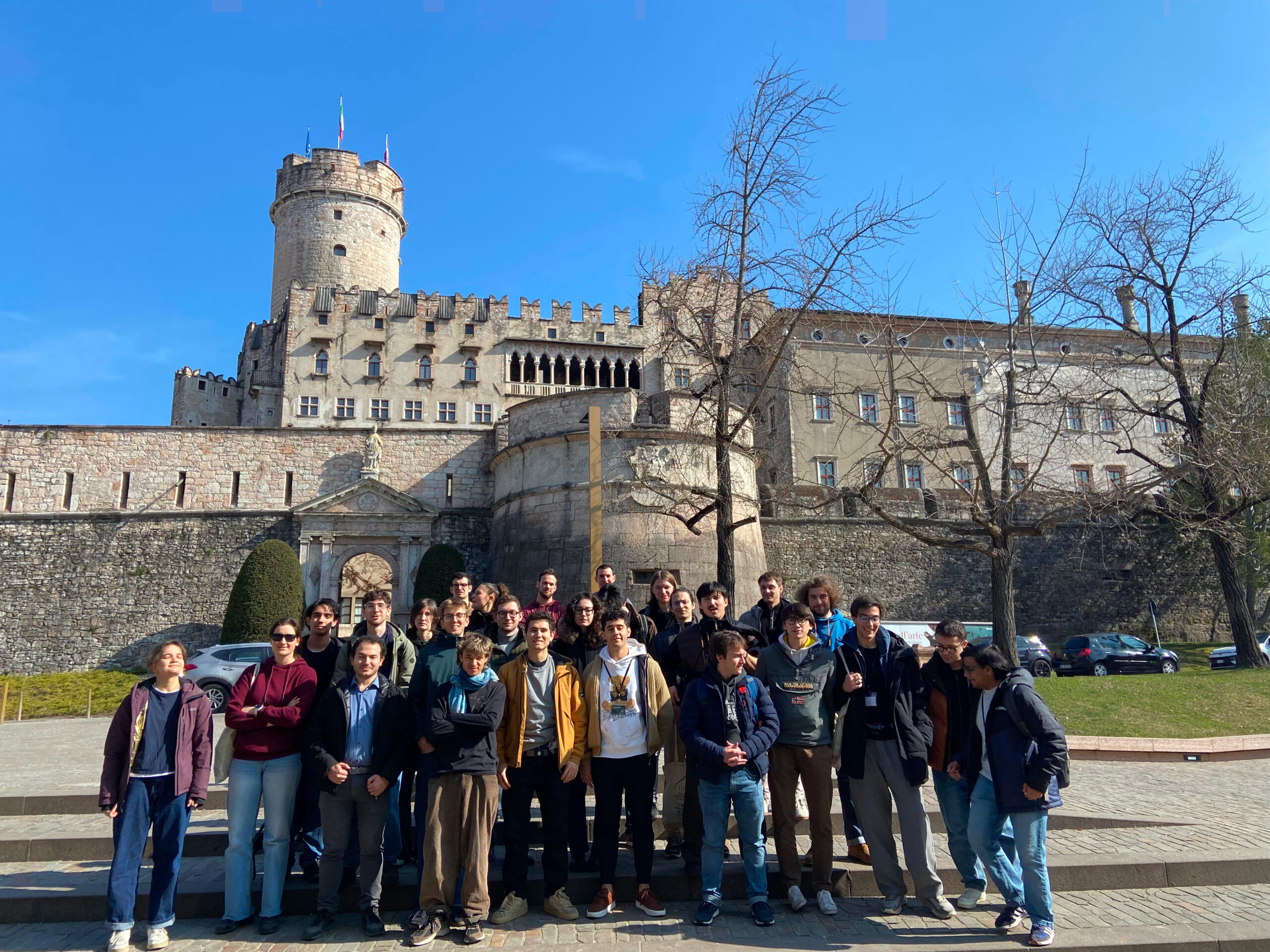
 🙌 We successfully concluded the TIQIT – Trento-Innsbruck Quantum Information Tour, which took place from 22–28 February and brought together 40 Bachelor’s and Master’s students for an exciting week of learning and exchange between Innsbruck and Trento.
🔎 The program focused on the topics Bose–Einstein Condensation, Nanoscience, Quantum Optics, and Quantum Information. Throughout the week, participants attended a series of lectures, lab tours, and social events, gaining valuable insight into the research and academic environment in both cities.
👩🎓 A highlight of the tour was the opportunity for students to meet and interact with PhD researchers, offering a first-hand perspective on research paths in quantum science.
🙏 A big thank you to our partners who made this experience possible: Universität Innsbruck, Institut für Quantenoptik und Quanteninformation (IQOQI) in Innsbruck , Università di Trento, and Euregio Tirol–Südtirol–Trentino.
News
Category for non scientific news
Breaking stereotypes together

Tyrolean Regional Minister for Science Cornelia Hagele visited IQOQI Innsbruck ahead of International Women’s Day. She spoke with Francesca and attended a get-together with motivated young female scientists from the atom*innen network.
The visit by Cornelia Hagele presented an opportunity to discuss current research, the role of Innsbruck as an international hot spot for quantum research, and the importance of women in quantum physics. Hagele also emphasized the importance of accessible role models: „We must not accept that old role models determine the course of our lives. After all, equality begins in the classroom. That is why we must inspire both girls and boys to take an interest in science. Talent ain’t got no gender.“
Read the full article about the event here: https://iqoqi.at/en/current/news/1053-breaking-stereotypes-together
Watch the full conversation between Francesca and Cornelia Hagele here:
Different Minds, Better Science – International Women’s Day Event at the ÖAW

Last Friday, Francesca spoke at the event “Different Minds, Better Science: The Benefits of Diversity in Research,” organized by the Austrian Academy of Sciences (ÖAW) to mark International Women’s Day. The event took place in the Festsaal of the ÖAW in Vienna and was introduced and moderated by environmental historian Verena Winiwarter.
Together with Anaïs Angelo, historian, Africanist, and fellow ÖAW scientist, the speakers reflected on how diverse perspectives strengthen both science and society.
In her talk, “Europe’s Quantum Future: Science, Talent and the Power of Inclusion,” Francesca highlighted the importance of diversity and inclusive research environments for attracting talent, fostering creativity, and advancing quantum science in Europe.
Riccardo awarded with best poster prize in Benasque
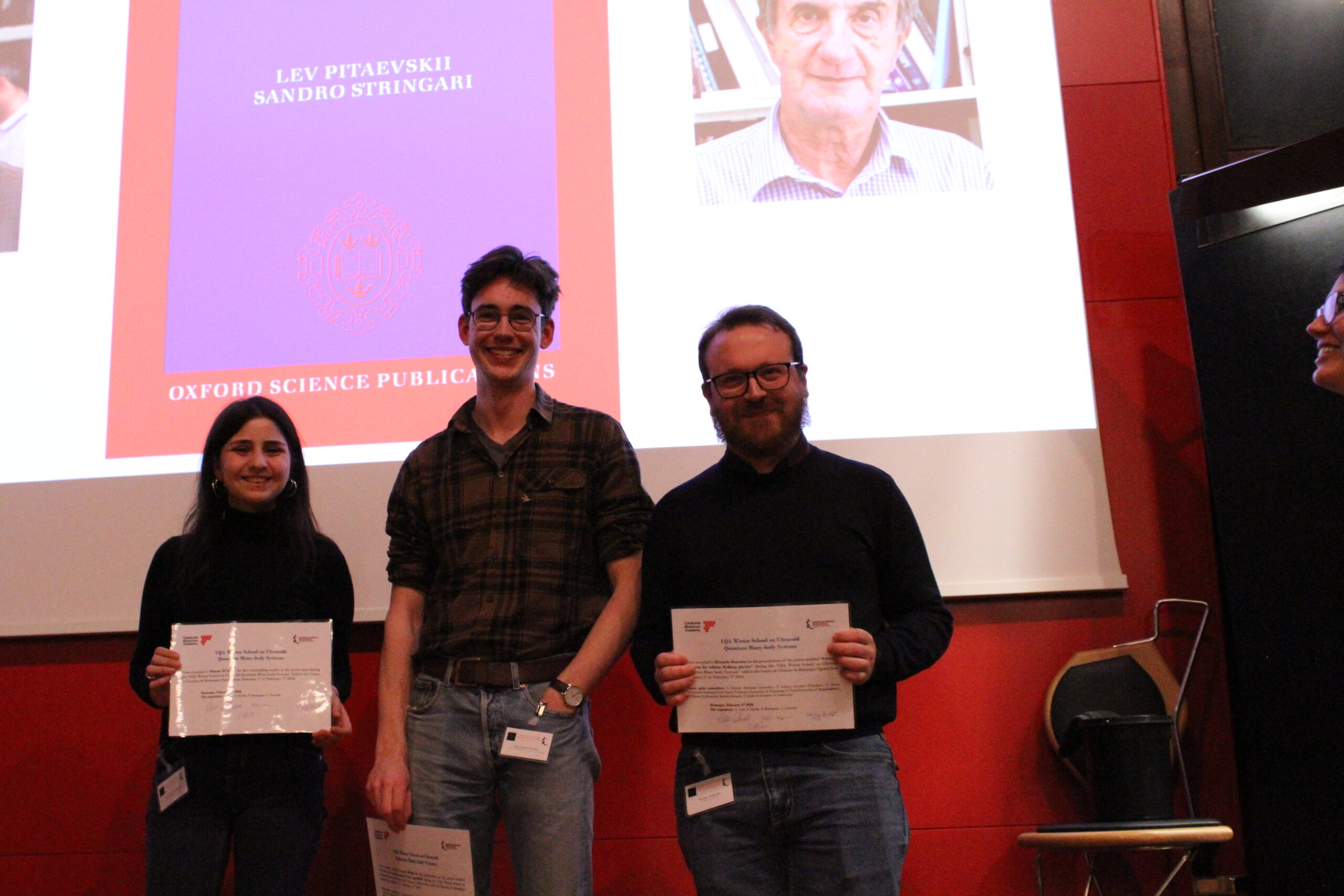
Riccardo Donofrio, PhD student in the Treqs Lab, has been awarded with the best poster prize for his poster “A tweezer platform for erbium Rydberg physics” at the Winter School of Ultracold Quantum Many-Body Systems that took place at the Benasque Science Center in the beginning of February. Congrats, Riccardo!
A Special Honor: Entry into the Golden Book of Innsbruck
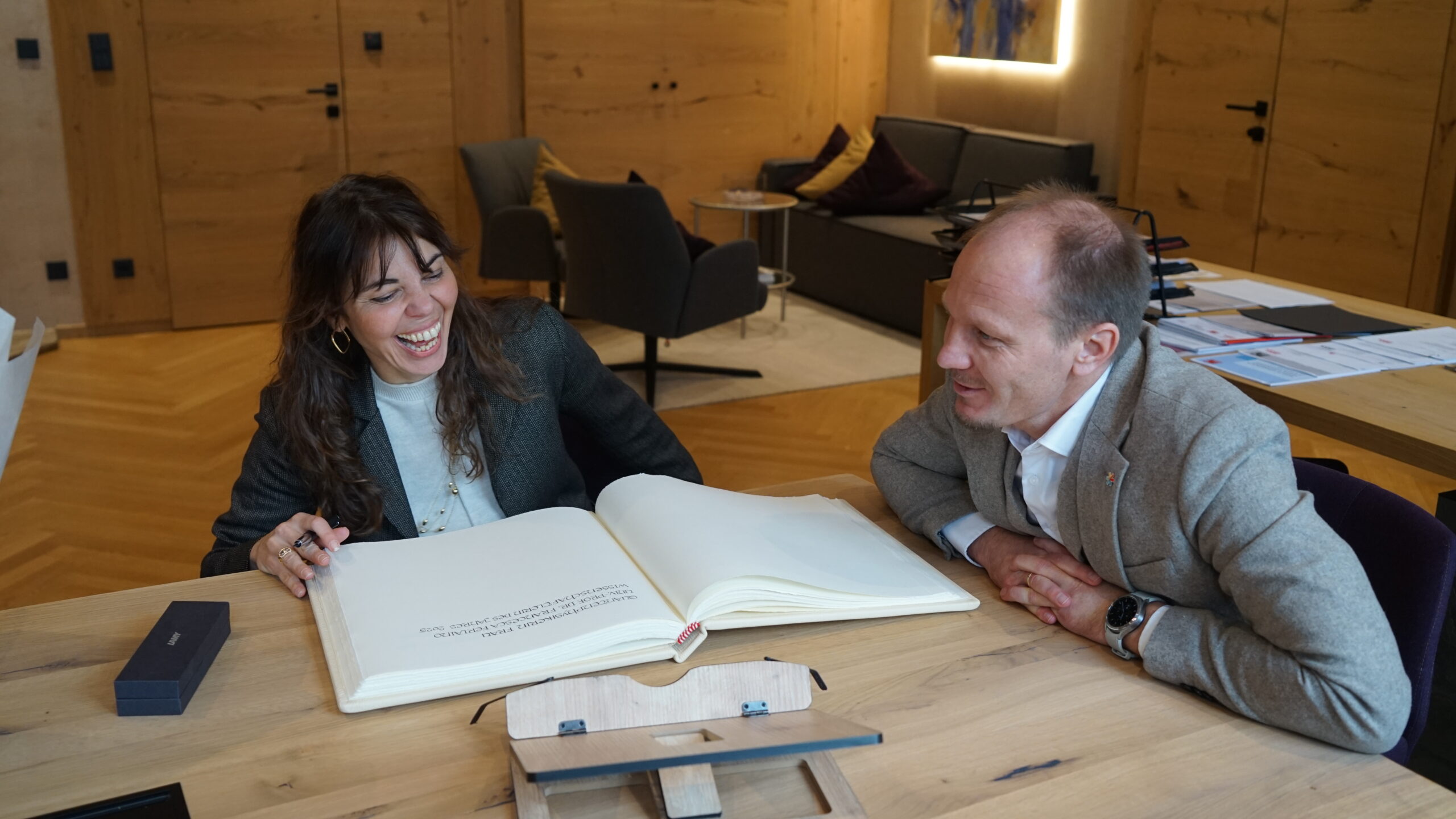
Francesca was invited to sign the Golden Book of the City of Innsbruck — an elegant and historic honorary book in which high-ranking guests and distinguished figures from politics, culture, sport, and science inscribe their names during official receptions at City Hall. Each entry is carefully prepared in advance by a professional calligrapher, highlighting the special significance of this tradition.
The invitation followed her recognition as Austria’s Scientist of the Year. Innsbruck’s mayor Johannes Anzengruber warmly congratulated Francesca and emphasized how proud the city is of her achievement.
The visit marked a meaningful gesture of appreciation from the City of Innsbruck for her outstanding accomplishments.
Francesca selected for the Quantum 100 story!
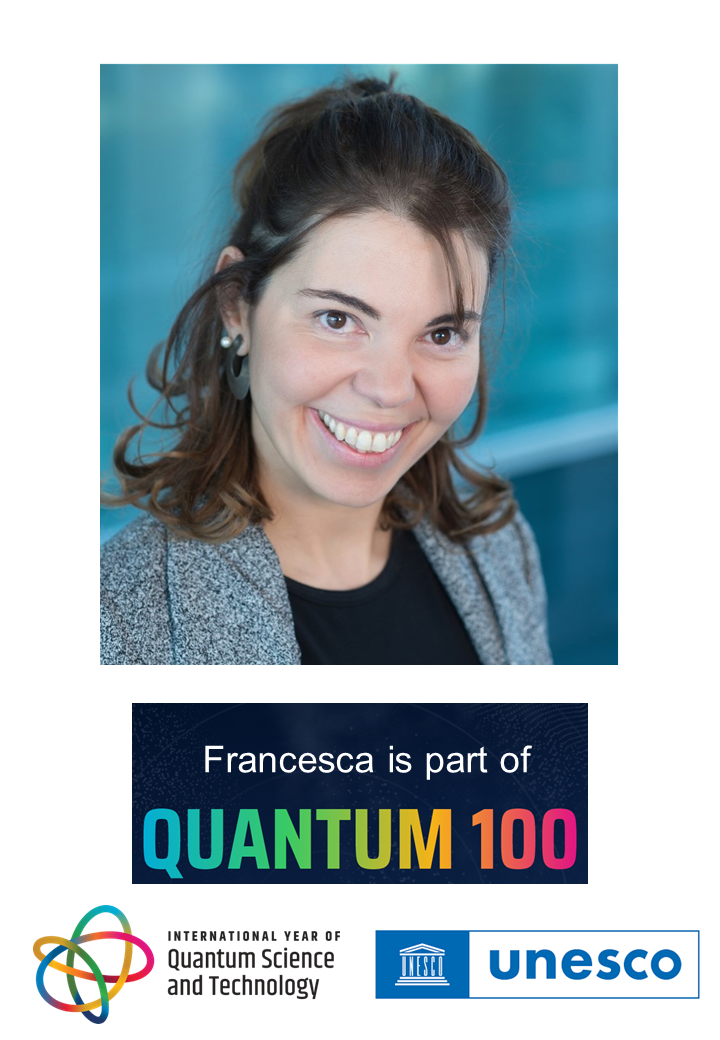
We are happy to share that Francesca is selected to be part of the “Quantum 100” for UNESCO’s International Year of Quantum Science and Technology!
💡 It’s exciting to see how the Quantum 100 provides a snapshot of the diverse community in quantum science — with career paths spanning academia, industry, education, art, culture, journalism, and policy.
Read Francesca’s story here!