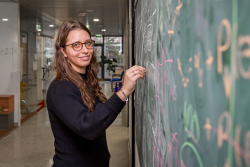
Francesca on the Gala Podium at FFG Forum 2026

© FFG/Stambera

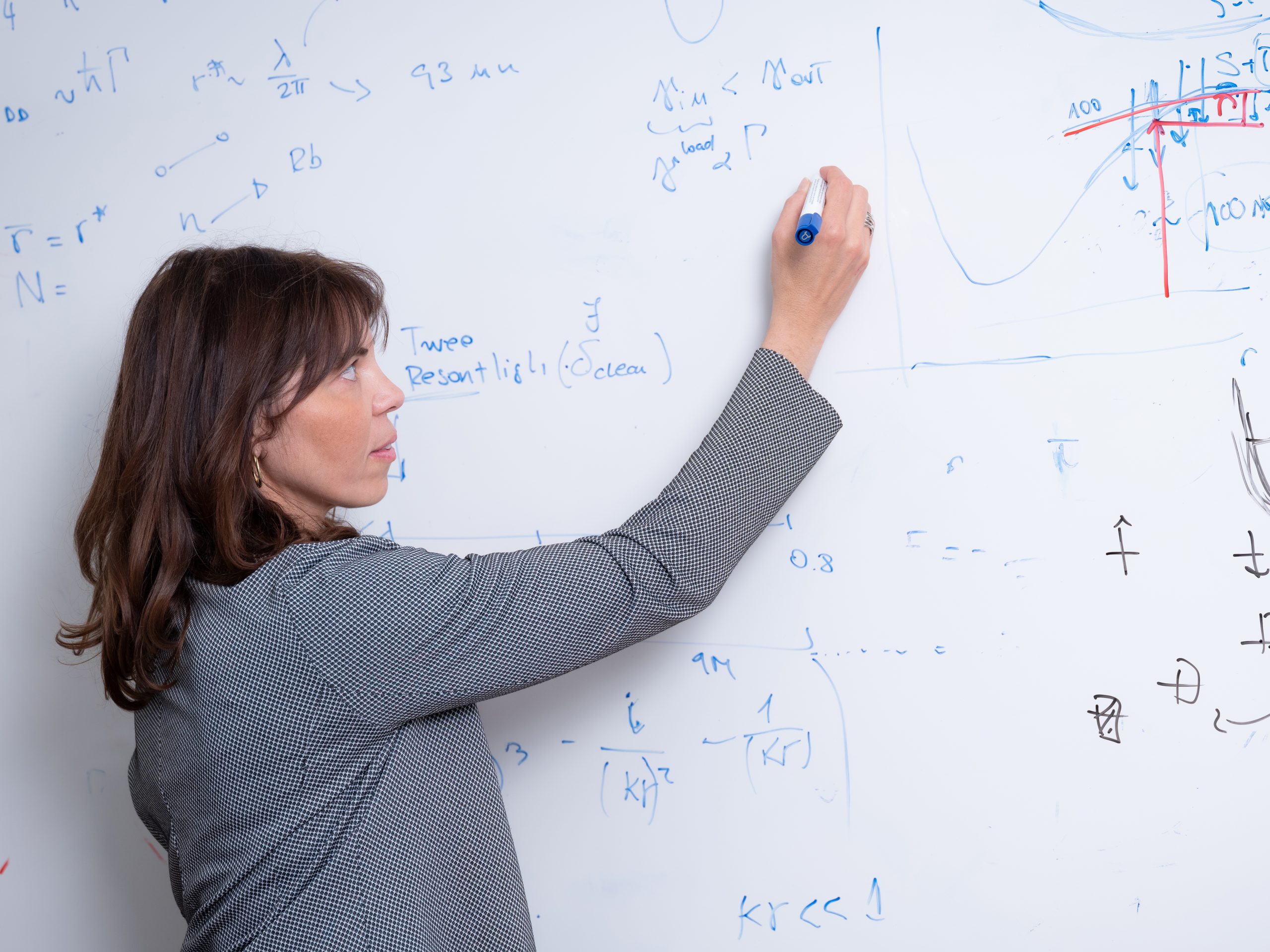
We were delighted to see Francesca at the gala podium at FFG Forum 2026, bringing together leading voices from business, research and innovation to discuss the future of Austria’s economic and technology landscape.

This year’s forum focused on the potential of key technologies and the ecosystems needed to successfully bring innovation into application. The discussions highlighted both the opportunities and challenges ahead — and the importance of creating the right conditions for innovation to thrive.

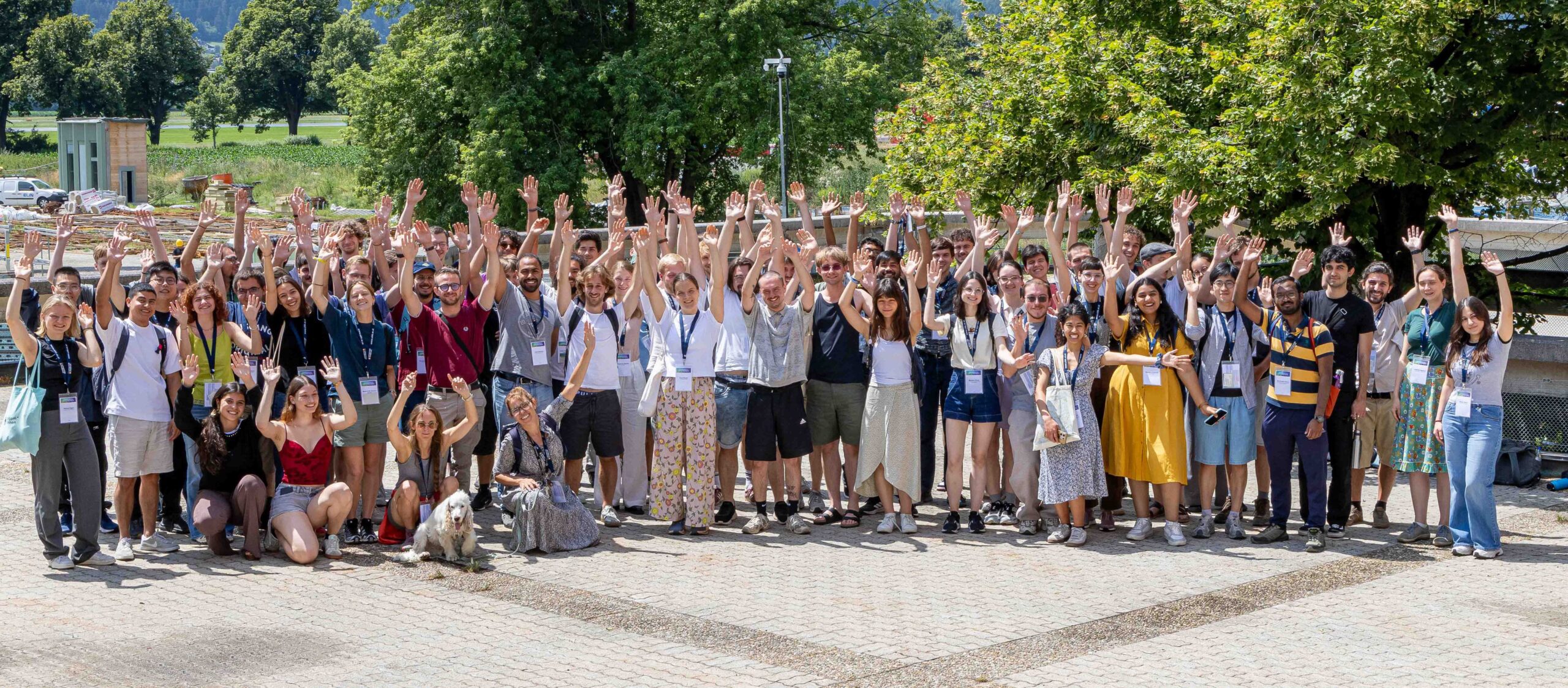
Successful 2026 Summer School on Cold Atoms and Ultracold Quantum Gases!

Over the past few days in Innsbruck, we had the pleasure of welcoming talented bachelor, master, and early PhD students to explore the fascinating world of ultracold quantum matter.

The program featured twelve inspiring lectures by experts from Innsbruck, Vienna, and Trento, covering topics ranging from laser cooling and trapping to Bose–Einstein condensation, ultracold Fermi gases, ultracold molecules, strongly correlated quantum gases, and optical lattices. Participants also had the opportunity to visit the state-of-the-art laboratories at the Universität Innsbruck and the Institut für Quantenoptik und Quanteninformation (IQOQI) in Innsbruck, gaining firsthand insight into cutting-edge research.

A heartfelt thank you to all the lecturers for sharing their expertise, to the students for their enthusiasm, curiosity, and engaging discussions, and to everyone who contributed to making this event a success.

Thanks to my fellow organizers, Grimm Rudolf and Hanns-Christoph Naegerl, and to Silvia Bonazza for her outstanding administrative support in making this Summer School possible.

We hope this experience has inspired the next generation of researchers in quantum science, and we look forward to welcoming you again at future editions!

📸 Image credit: David Jordan / IQOQI
Manex defends his Bachelor thesis


We congratulate Manex Ugarte-Egana from Mondragon University (Basque Country), who joined our group for his Bachelor thesis project from November 2025 to July 2026 and has now defended his excellent work on a ARTIQ-based control sytem for our new labs!

Group Barbecue and Ping-Pong Tournament

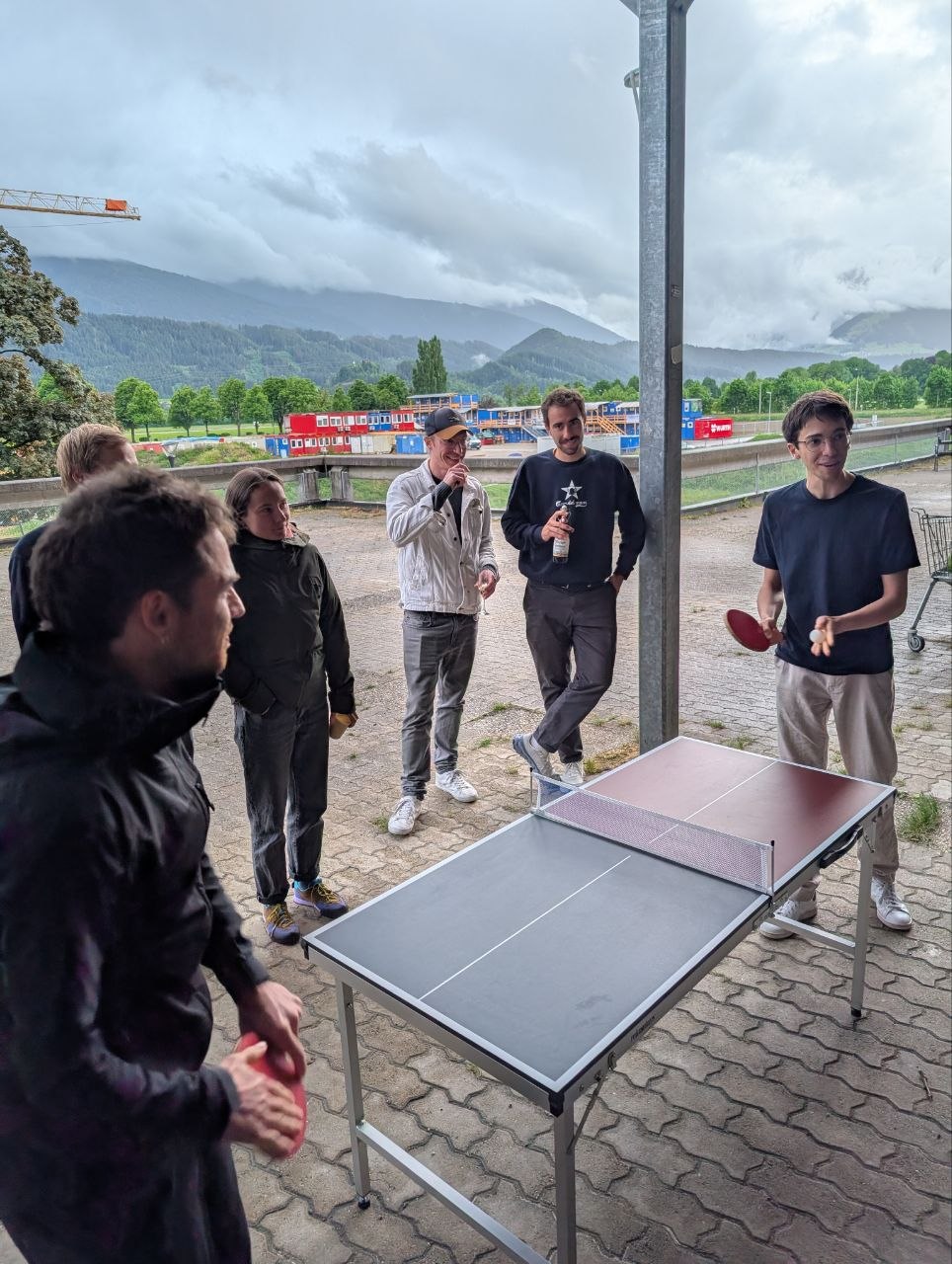
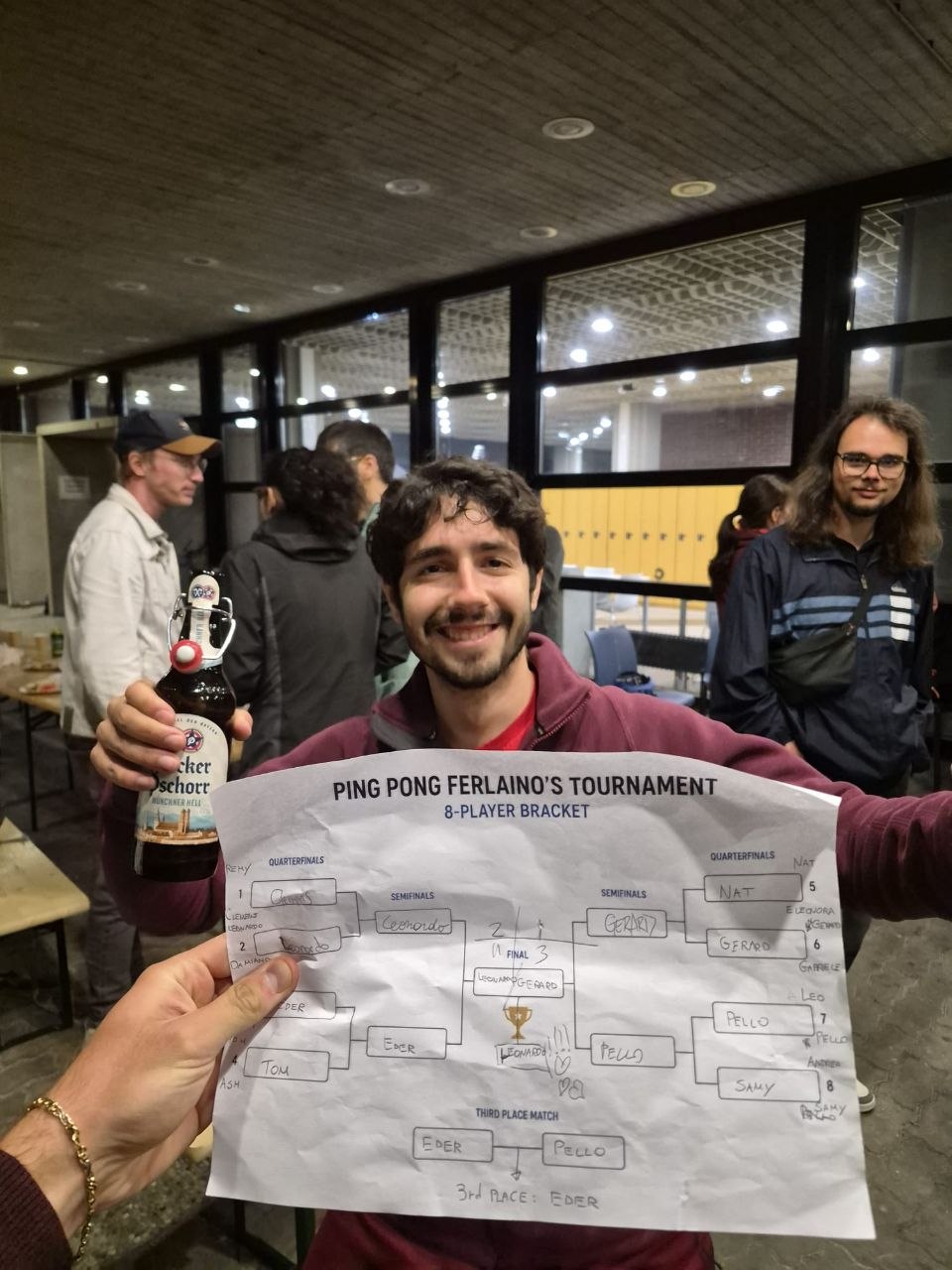
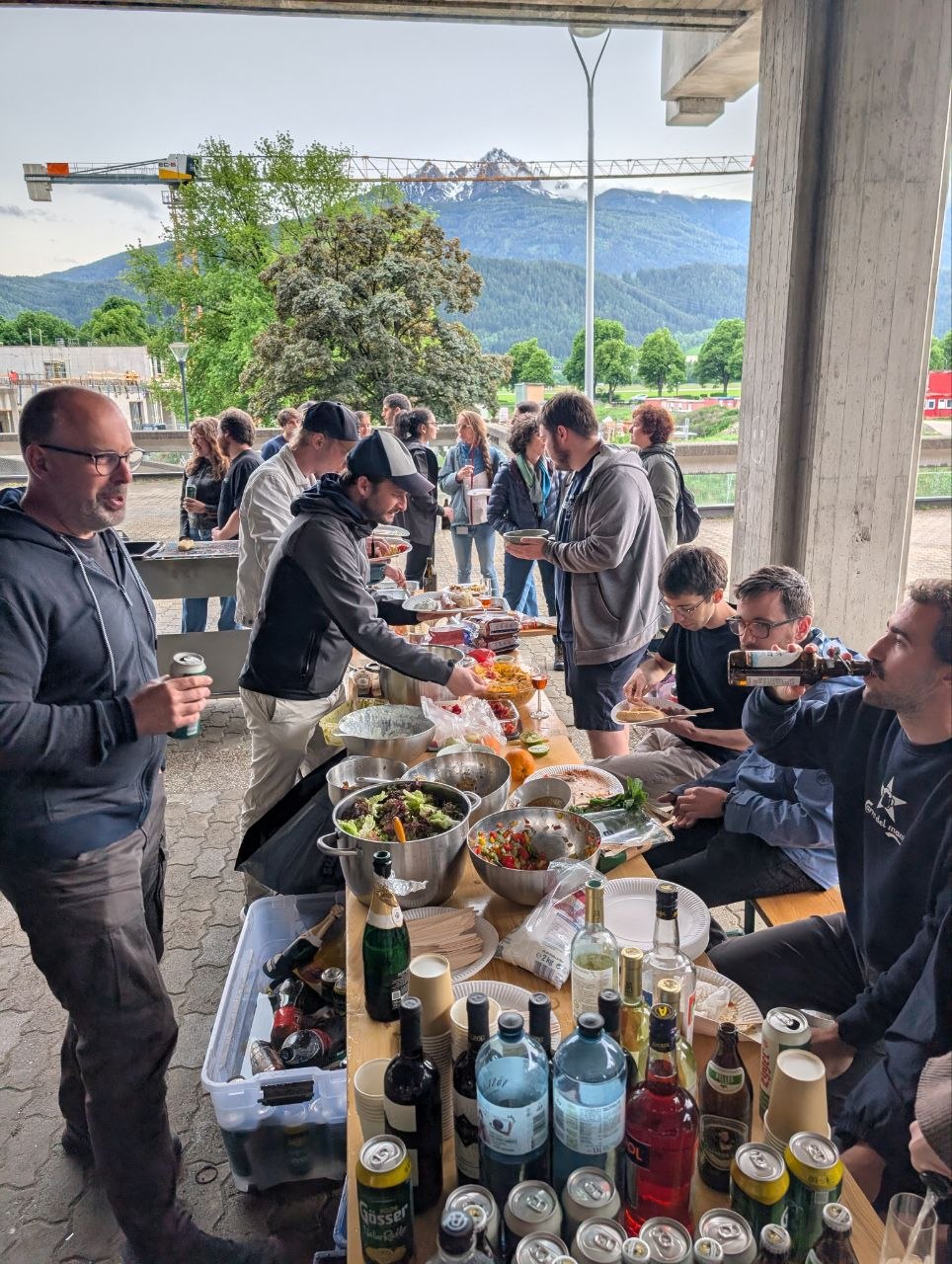
Last week, we had a lot of fun at our group event, which brought together all our group members, friends and family, current visitors, and former group members. We enjoyed delicious food from the grill and an exciting ping-pong tournament with more than 20 participants. This year’s well-deserved winner is Leonardo!

Elena Poli awarded IQOQI Dissertaton Prize 2025

Photo Credit: David Jordan

Elena Poli, a former PhD student in the theory department of our research group, received the IQOQI Dissertation Prize 2025. The prize, worth EUR 1.000, has been awarded since 2013 as a recognition for outstanding scientific achievements in the field of quantum physics. We warmly congratulate Elena Poli on her success!

In her dissertation, Elena Poli characterizes the dual-nature of supersolids – paradoxical quantum systems in which crystalline order coexists with superfluid flow. These states could be realized in the context of ultracold dipolar gases, a field in which the research group of Prof. Francesca Ferlaino is at the forefront.

The work presented in the dissertation is primarily based on numerical simulations, complemented by close collaboration with experimentalists, within the local theory–experiment environment. Elena Poli developed theoretical approaches to identify clear signatures of both solid and superfluid behaviour in two-dimensional dipolar supersolids, focusing in particular on the emergence of a finite shear modulus and the nucleation of quantized vortices. Finally, she demonstrated how these systems can serve as quantum simulators of neutron star glitches, linking vortex dynamics in dipolar supersolids to astrophysical phenomena. Her work not only advances current research in low-temperature quantum physics but also establishes an important interdisciplinary bridge with astrophysics, marking significant progress toward the quantum simulation of stellar objects from Earth.

Read the full article here.