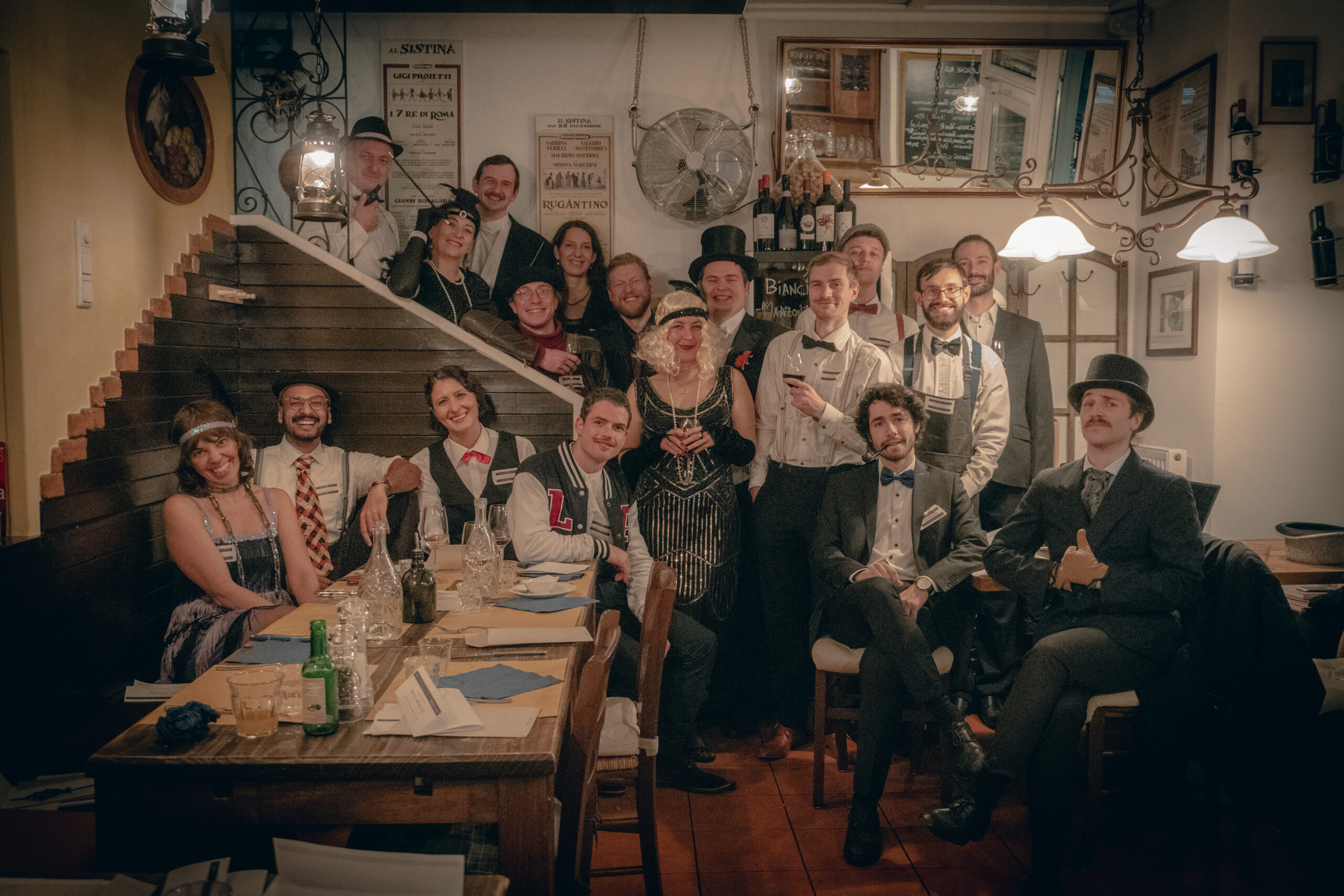
Our 2024 group dinner took place on the 18th of January at CasoinN da Giorgio restaurant, with a 1920’s Murder Mystery theme!
Center for Ultracold Atoms and Quantum Gases, IExP and IQOQI, Innsbruck
 FF
FF 
Our 2024 group dinner took place on the 18th of January at CasoinN da Giorgio restaurant, with a 1920’s Murder Mystery theme!
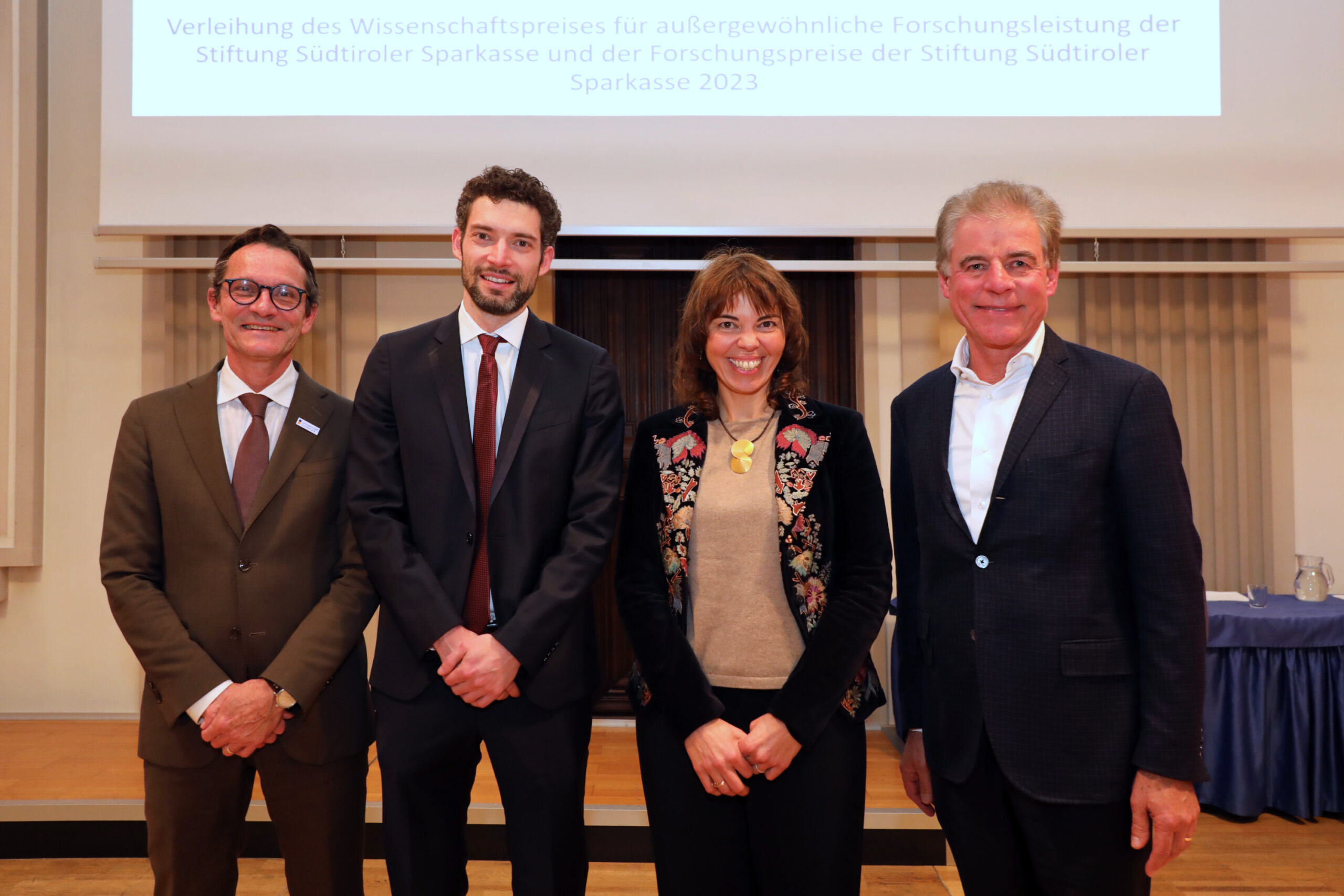
Südtiroler Sparkasse Foundation award ceremony – 24 January 2024
Francesca was awarded the Südtiroler Sparkasse Foundation’s Science Prize for exceptional research achievements on the 24th of January 2024 . These awards recognize outstanding scientific achievements by scientists working at the University of Innsbruck.
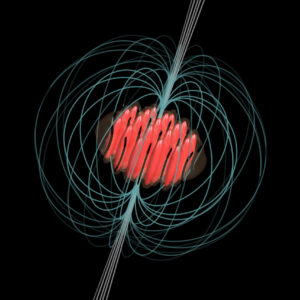
By emulating the connection between a rotating supersolid phase and an external solid phase, we were able to replicate “glitches” – sudden jumps in the solid angular momentum driven by quantum vortices leaving the supersolid.
18-24.2.2024. The Trento-Innsbruck Quantum Information Tour is happening again next year, see full details in our events page!!
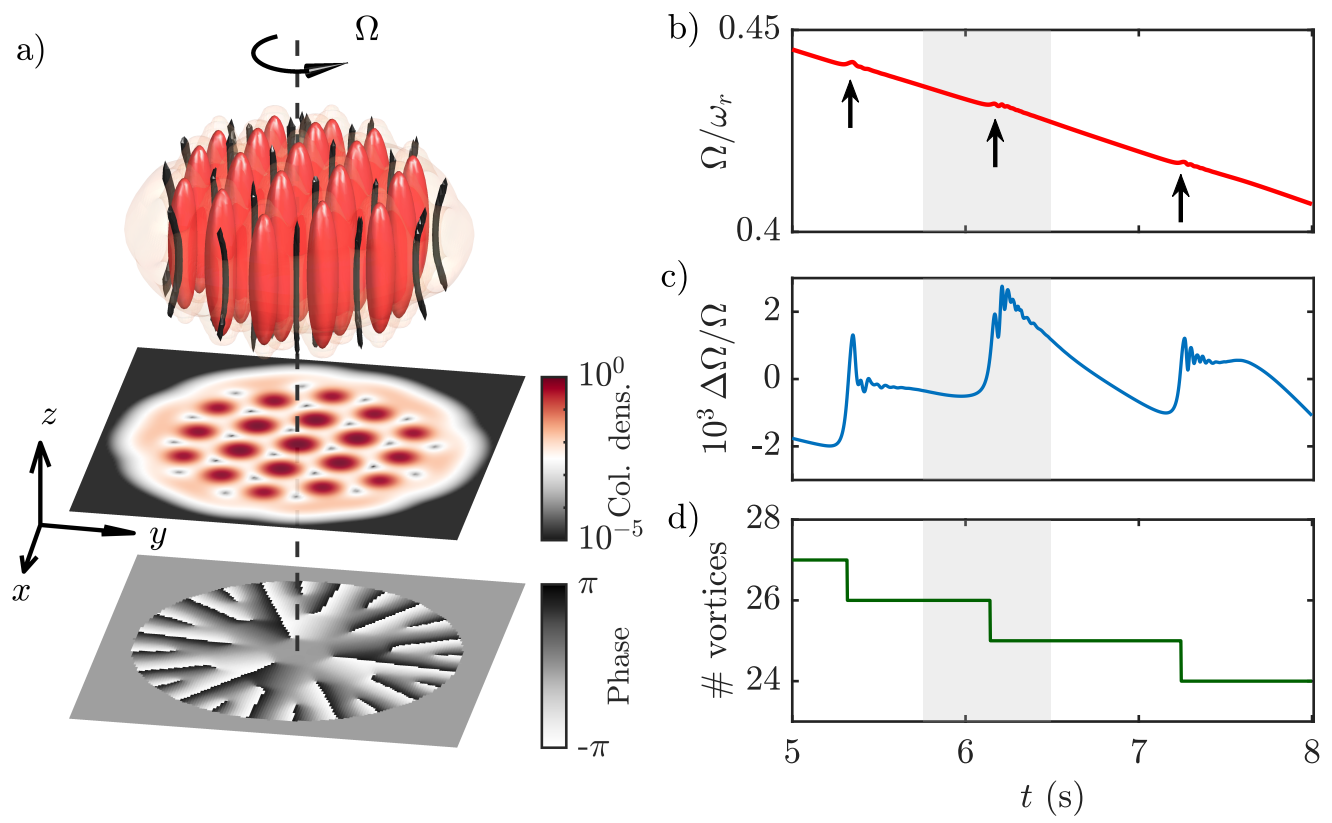
With colleagues from LNGS and Gran Sasso Science Institute (L’Aquila, Italy), we show that rotating dipolar quantum gases in the supersolid phase can serve as a versatile analogues of neutron stars effectively emulating their behaviour during a glitch, an occasional abrupt speed up of a highly magnetic neutron star’s rotation frequency, followed by a slow relaxation. In rotating neutron stars, glitches are believed to occur when many superfluid vortices unpin from the interior, transferring angular momentum to the stellar surface. In the supersolid analogy, we show that a glitch happens when vortices pinned in the low-density inter-droplet region abruptly unpin. We show that dipolar supersolids offer an unprecedented possibility to test both the vortex and crystal dynamics during glitches events and they provide a tool to study glitches originating from different radial depths of a neutron star. Benchmarking our theory against neutron star observations, these results will open a new avenue for the quantum simulation of stellar objects from Earth.
See the paper here: Phys. Rev. Lett., arXiv:2306.09698
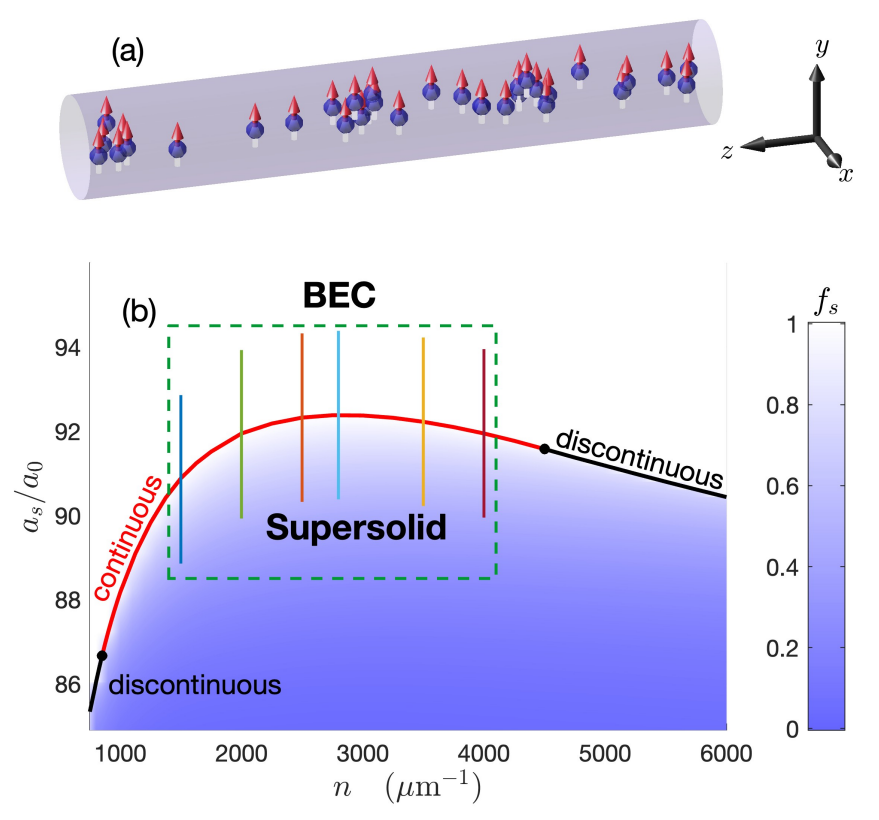
In collaboration with colleagues from Otago, we investigate the excitation spectrum and compressibility of a dipolar Bose-Einstein condensate in an infinite tube potential in the parameter regime where the transition between superfluid and supersolid phases occurs. Our study focuses on the density range in which crystalline order develops continuously across the transition. Above the transition the superfluid shows a single gapless excitation band, phononic at small momenta and with a roton at a finite momentum. Below the transition, two gapless excitations branches (three at the transition point) emerge in the supersolid. We examine the two gapless excitation bands and their associated speeds of sound in the supersolid phase. Our results show that the speeds of sound and the compressibility are discontinuous at the transition, indicating a second-order phase transition. These results provide valuable insights into the identification of supersolid phenomena in dipolar quantum gases and the relationship to supersolidity in spin-orbit coupled gases.
See the paper here: Phys. Rev. Research 5, 033161 (2023)